How Games Build Infinite Worlds
How Games Build Infinite Worlds
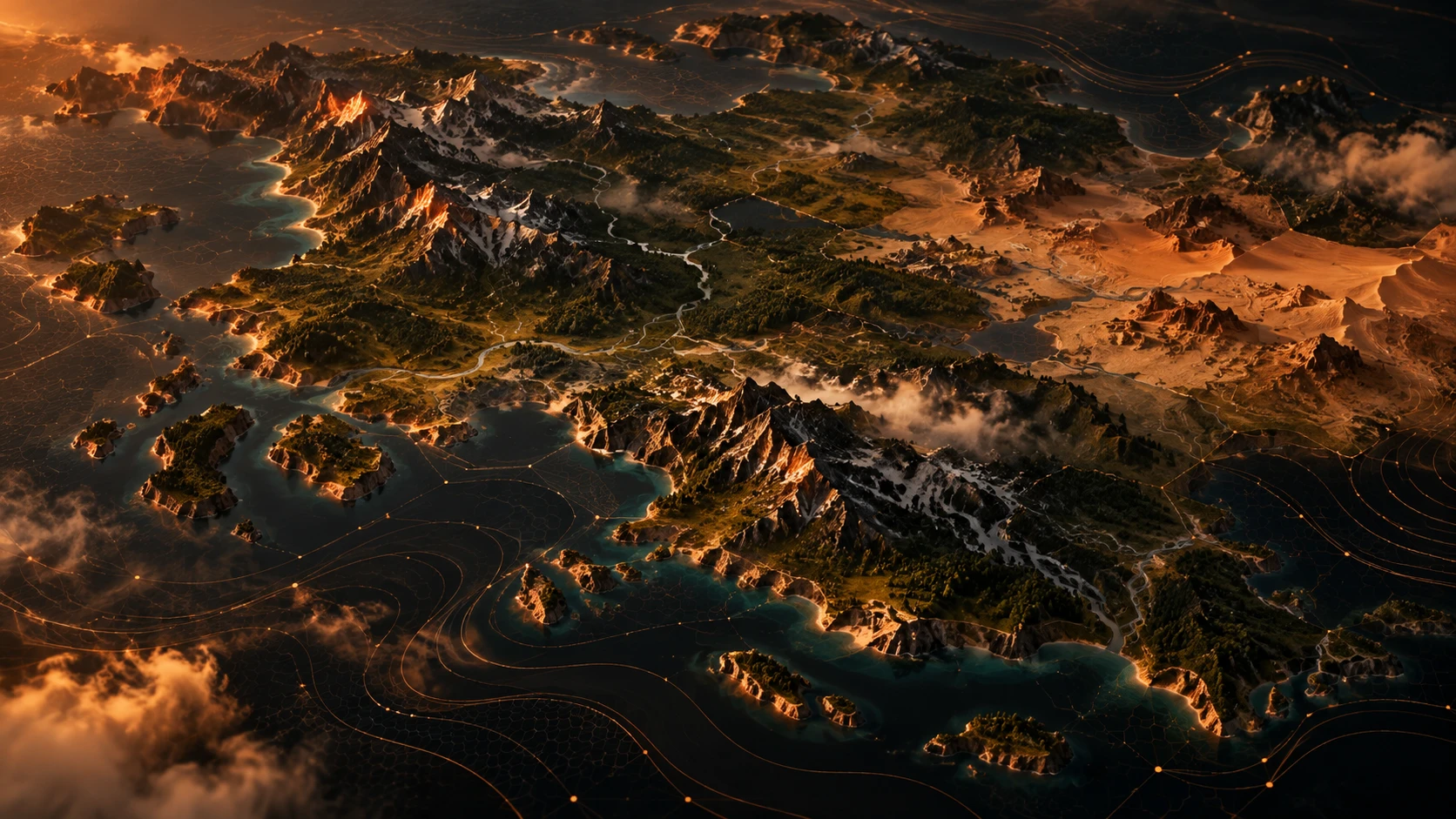
Some of the biggest video game worlds start with something very small: a set of mathematical rules.
Developers do not place every mountain, forest, river and tree by hand. But they also cannot rely on pure randomness, because random terrain would look like visual noise.
Instead, they use procedural generation — a system where the computer creates the world by following rules designed by humans.
Randomness Doesn’t Look Natural
If every point on a map had a completely random height, the landscape would look chaotic. One point could be flat, the next could suddenly become a mountain, and the next could drop into a valley.
Nature does not work that way.
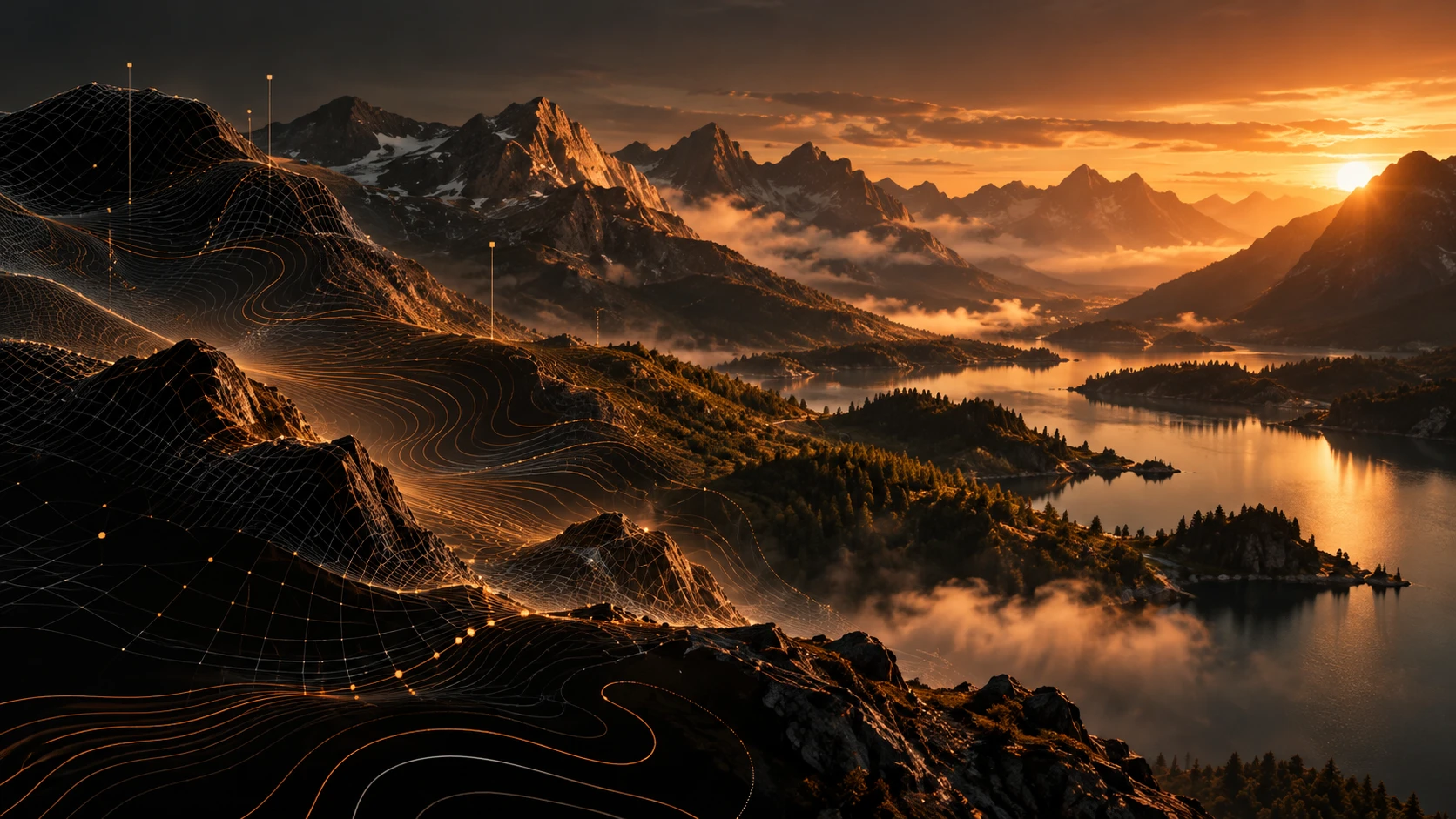
Landforms usually flow into one another, so developers use something called noise to create smoother patterns. One of the best-known examples is Perlin noise. Instead of creating random values that jump around, it creates gradual changes across a surface.
High areas can become mountains. Low areas become valleys or water. Everything in between connects smoothly.
That simple idea is the starting point for many procedural landscapes.
Adding More Detail
One layer of noise usually looks too simple, so developers stack several layers together.
Large patterns create continents and mountain ranges. Medium patterns shape hills and valleys. Smaller patterns add cliffs, rocks and rough coastlines.
It is similar to designing anything else: start with the big form, then add detail.
The interesting part is that a complicated world can come from several simple systems working together.
How the Game Decides Where Forests and Deserts Go
Once the basic terrain exists, the game needs to decide what kind of environment belongs in each area.
Developers can create invisible maps for things like:
- elevation
- temperature
- moisture
Those values are combined to decide what appears.
High and cold might become snowy mountains. Warm and dry might become desert. Wet and low might become forest.
The game is not manually told where every forest should go. Instead, it is given rules for when a forest should exist.
That difference is what makes procedural generation so powerful.
Making the World Feel Less Mathematical
Another tool developers use is called a Voronoi diagram. It divides a map into different regions, almost like irregular tiles. Those regions can become biomes, territories or environmental zones.
The problem is that the borders can look too clean and geometric. So developers distort them slightly using noise.
Straight lines become irregular. Perfect shapes become more natural.
The math is still there, but you stop seeing it.
The Same Math Can Control Gameplay
These systems do more than create scenery.
The game can use the same information to decide where objects and resources appear.
For example: if an area is a forest, sits at the right elevation and is not too steep, the game can place trees there.
Similar rules can control animals, minerals, plants and other resources.
The environment becomes part of the game itself.
Even Weather Can Be Procedural
Weather can work in a similar way.
Instead of switching the entire world from sunny to rainy, developers can use moving noise patterns to create storms that travel across the map.
Clouds move from one region to another. Rain appears gradually.
Weather feels connected to the world rather than simply turning on and off.
The Bigger Idea
What makes procedural generation interesting is that the designer is not creating every final object. They are creating the rules that produce the objects.
You are not designing one mountain. You are designing a system capable of producing thousands of mountains.
The computer creates the variation, but the designer still decides what looks right.
And that idea reaches far beyond games. The same thinking is already being used in architecture, 3D environments, generative design and AI tools.
Sometimes the most powerful form of design is not creating the final result.
It is creating the system that makes the result possible.